Creating a Monster

BACKGROUND: Hansen Beverage Co. and Red Bull GmbH simultaneously launched the energy drink category in 1997. However, by 2000, every other beverage company had entered the category and Hansen’s once handsome half-of-market share was reduced to a lowly 8%. Meanwhile, a regional player was making headway with a 16 oz energy drink called Rockstar – at a decent price point compared to the standard 8.3 oz can – so this new “double-size” can was seen as an opportunity for Hansen to distinguish their offering and renew their growth in this vicious and overheated segment.
BUSINESS OBJECTIVE: Capitalize on the emerging double-size trend and fend off competitors entering the category. Drive sales, volume, and market penetration via the 16 oz proposition. Other energy drinks were gaining momentum and more 16s were imminent, so Hansen needed decisive action to preempt other majors and stay ahead of the trend.
PROJECT CHALLENGE: Succeed where others were failing. Create a new, ownable standard and become “the” 16 oz energy drink. Stake out a leading position in the category – second only to entrenched leader Red Bull with 74% of the marke – by carving sales directly out of their share.
DESIGN CHALLENGE: Create a desirable offering engineered to become an icon for a generation inherently suspicious of traditional marketing and advertising.
Brand Strategy
- Recognize that the Hansen’s brand equities are inconsistent with the target market
- Create a new brand from scratch to be an icon for young, edgy, and skeptical consumers
- Carve market share directly out of Red Bull, the category leader (74%)
Consumer Profile
- Individualistic
- Distinctively unique, but socially inclusive
- Unconventional
- Exploring territory outside traditional experiences
- Authentic
- Dismissive of outside influences such as trends or traditions
- Experienced
- No virgins, no voyeurs, no pretenders
- Aggressive
- Rebel to the bone, wired for sound
- Uninhibited
- Exhibitionist, piercings and body tattoos
- Outlaw
- Spirited non-conformist, wild-west saloon brawler
- Non-Commercial
- Intensely adverse to manipulation
- Exclusive
- For the dedicated enthusiast only
- Aspirational
- For those of us who only wish
Market Insights
Create an intense drink for intense people, a new generation of fearless, new-age adventurers defining their own standard of enthusiastic partying that never needs to end. Brand must be iconic and provide room for interpretation by early adopters.
Development Process
Starting with a wide range of product attributes and consumer attitudes, we brainstorm a wide range of possible names. Then we measure the names against the full wealth of our learnings to help ensure a targeted result.
| BRAND NAMING GENERATION – TOP TEN NAMES… |
MEASURED AGAINST THE FOLLOWING ATTRIBUTES: |
- Hammerhead
- Size/Volume
- Twice the Size – 16 oz vs. 8 oz
- Fatboy
- Potency
- Promises a benefit, not a feature
- Deuce
- Non-Conformist
- Self determined
- Wild Hare
- Innovative
- Distinctive
- Monster
- Self-Mockingv
- Not too serious
- Jake
- Individualistic
- Makes his own way
- Howler
- Witty
- Humor with style
- Igniter
- Humble
- Knows own strength
- Siren
- Polarizing
- Love it or hate it
- Lucky Toad
- Requestability
- Hey, get me a…
Narrowing the field to three top choices, we begin to explore the visual representation of brand on package,creating integrated designs that reaffirm the inseparable bond between brand and package.
THE FINAL NAMES CHOSEN FOR GRAPHIC EXPLORATION:
- Fatboy
- Deuce
- Monster
These concepts are then taken through a final phase of confirmation research, via intercepts at venues where our target audience gathers: Extreme sports event, Convenience store, On-premise
Concept Design


Solution
The reasons behind any brand taking on a life of its own are many and varied. However, tracking backwards to the original premise and our carefully defined consumer attitudes, we believe this project was engineered for success.
First and foremost, the product benefit is clear in both name and execution:
Monster = Big, Double Size at 16 oz
Monster = Maniacal Energy
Monster = Social Renegade
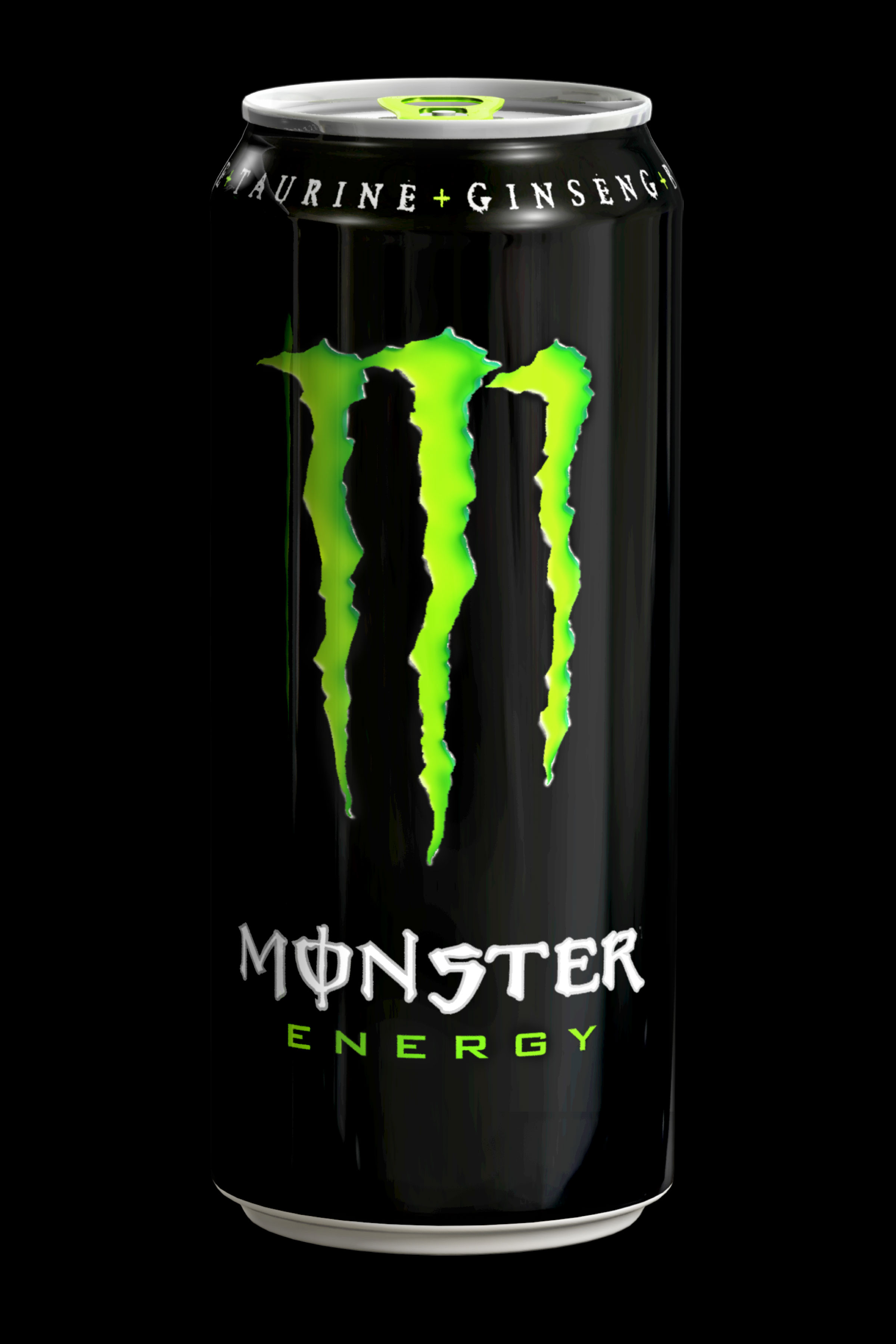
Second, the promise of an energy drink is captured in the green glow ripping through a sinister void.
Third, on shelf the packaging creates its own quiet space and brand blocking in a cluttered retail environment.
And finally, the powerful and iconic brand elements embody an ideal that ultimately translates – for the company and consumer – into an broadly extendable brand equity.
THE FINAL ANSWER 
An integrated brand and package which, in the simplicity of its message and execution, is both powerful and iconic, and promises exactly what it delivers.
The Monster Energy line-up continues to expand with new flavors and formulas. Additionally, Monster recently launched a line of coffee-based energy drinks called “Java Monster” (not shown here) which opens up all new territory for growth.
RESULTS: A BILLION DOLAR BRAND
Within seven years of launch, Monster reached the billion-dollar mark and has gained worldwide recognition. The original intent to become second in the market was quickly achieved and Hansen Beverage Co. continues to make headlines for the phenomenal success of Monster.
Understanding how to create a billion dollar brand from scratch isn’t easy, but the basic principals apply across the board.
Our learnings from creating this monster:
- Simplicity is power in a noisy category.
- Less is more. Say less, but with authority. Be heard.
- Define emotional connections first. Graphics follow.
- In a parity product, brand & package are everything.
- Even new products with little support can break through and win the day!

These charts show Monster’s phenomenal growth since its 2002 launch. Monster has recently overtaken Red Bull in retail and is threatening their on-premise sales with the help of a new
distributor partnership with Anheuser-Busch.